

Free Download Barbarians at the Gate by Bryan Burrough, John Helyar PDF
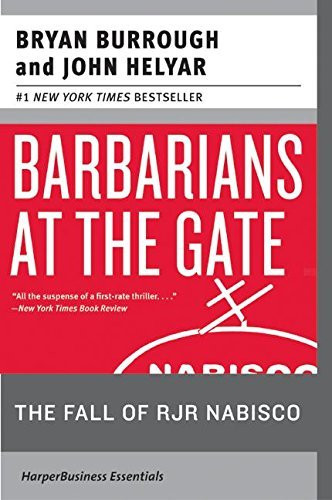
The late 1980s represented a transformative era for American capitalism, characterized by high-stakes deals and the rise of the leveraged buyout. At the heart of this financial revolution stands "Barbarians at the Gate: The Fall of RJR Nabisco," a seminal work of investigative journalism by Bryan Burrough and John Helyar. The book provides a meticulous account of the 1988 battle for control over RJR Nabisco, which at the time was the largest corporate takeover in history. By examining the intricate details of this transaction, the authors offer a profound look into the motivations of the individuals who shaped the modern financial landscape.
The narrative begins with F. Ross Johnson, the charismatic but controversial CEO of RJR Nabisco. Seeking to increase shareholder value and perhaps his own personal fortune, Johnson initiated a plan to take the company private. This decision ignited a firestorm on Wall Street, drawing in major players like Henry Kravis of Kohlberg Kravis Roberts & Co. (KKR), as well as representatives from American Express and Morgan Stanley. What followed was a chaotic and often ego-driven bidding war that exposed the raw mechanics of corporate greed and the complexities of high-finance negotiations.
The Mechanics of the Deal
One of the most compelling aspects of the book is its detailed exploration of the leveraged buyout (LBO) process. Burrough and Helyar break down the financial engineering required to fund such a massive acquisition, illustrating how debt was used as a primary tool for corporate restructuring. The authors do not merely focus on the numbers; they delve into the personalities involved, portraying the clash between the "old guard" of corporate management and the "new barbarians" of private equity. This tension provides a narrative drive that makes the complex financial maneuvers accessible. The RJR Nabisco takeover remains a benchmark for understanding how private equity firms operate and the risks associated with highly leveraged transactions.
Throughout the text, the authors maintain a neutral perspective, allowing the actions of the participants to speak for themselves. The descriptions of the late-night negotiations, the strategic blunders, and the sheer scale of the fees involved provide a vivid picture of a world where billions of dollars were moved like chess pieces. The book serves as a cautionary tale about the consequences of corporate excess and the potential for personal ambition to overshadow institutional stability. It highlights the role of investment bankers and lawyers who often prioritized their own commissions over the long-term health of the company being acquired.
The book's structure is designed to build tension, mirroring the real-life escalation of the bidding war. As the price for RJR Nabisco climbed to unprecedented heights, the financial community watched with a mixture of awe and trepidation. Burrough and Helyar capture the atmosphere of the era perfectly, documenting the lavish lifestyles of the executives and the cutthroat nature of the negotiations. This attention to detail ensures that the reader is witnessing a pivotal moment in social and economic history.
Legacy and Significance
- Educational Value: For students of business and finance, the book remains an essential case study in corporate governance and mergers and acquisitions. It provides a blueprint for understanding the psychology of the negotiation table.
- Cultural Impact: It helped define the public perception of Wall Street in the 1980s, influencing countless other books and films that sought to capture the "greed is good" mentality.
- Investigative Depth: The level of access the authors gained to the principal players remains a benchmark for business reporting. Their ability to synthesize thousands of pages of documents into a cohesive narrative is a testament to their skill.
For those looking to understand the foundations of modern private equity, obtaining a copy of "Barbarians at the Gate" is highly recommended. Whether you are accessing a physical copy or seeking a PDF version for digital reading, the insights contained within its pages remain remarkably relevant. The book captures a specific moment in time when the rules of engagement for American business were being rewritten. It is a story of ego, power, and the high price of victory in the corporate arena.
In conclusion, the work by Burrough and Helyar is more than just a financial history; it is a compelling human drama. It illustrates how the pursuit of a deal can consume the lives of those involved and reshape entire industries. As readers navigate the chapters detailing the fall of RJR Nabisco, they are invited to reflect on the ethics of the marketplace and the enduring legacy of the "barbarians" who once stood at the gate.



Comments (0)