

Free Download I'm OK - You're OK by Thomas A. Harris PDF
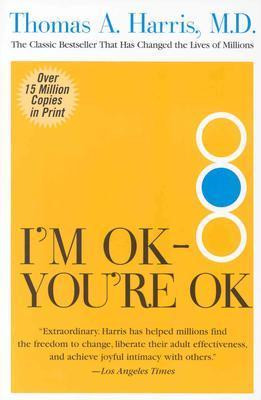
Published in 1967, "I'm OK – You're OK" by Thomas A. Harris remains one of the most influential self-help books in history. It introduced the general public to the complex world of Transactional Analysis (TA), a psychological theory developed by Eric Berne. Harris’s work demystified human behavior by categorizing our internal dialogues and external interactions into understandable frameworks. For those seeking to understand why they react certain ways in social situations or why they feel a persistent sense of inadequacy, this book provides a roadmap toward emotional maturity and improved interpersonal relationships.
The foundation of Harris’s approach is the concept of the three ego states: Parent, Adult, and Child. Every individual carries these three components within their psyche. The Parent state represents the recorded external events that occurred during the first five years of life—usually the rules, warnings, and behaviors of one’s own parents. The Child state consists of the internal feelings and reactions associated with those early experiences. Finally, the Adult state is the data-processing center that begins to develop as we grow, allowing us to evaluate the Parent and Child data and make objective decisions based on current reality.
The Four Life Positions
One of the most enduring contributions of the book is the classification of the four life positions. Harris argues that every person adopts one of these perspectives early in life, which then dictates their social interactions and self-image throughout adulthood.
- I'm Not OK – You're OK: This is the most common position, where an individual feels inferior to others. It often stems from the inherent dependency of childhood where the child relies on the "all-powerful" parent.
- I'm Not OK – You're Not OK: A position of despair where neither the self nor others are seen as valuable or capable, often leading to a withdrawal from society.
- I'm OK – You're Not OK: A defensive stance, often resulting from early trauma, where the individual protects themselves by devaluing others to maintain their own sense of superiority.
- I'm OK – You're OK: The ultimate goal of Transactional Analysis. This is a conscious decision to accept oneself and others as inherently valuable, regardless of past conditioning or mistakes.
Transitioning to the "I'm OK – You're OK" position requires the active engagement of the Adult ego state. Unlike the first three positions, which are largely unconscious and based on early childhood feelings, the fourth position is a rational choice. By studying the digital version of this text, readers can learn to identify "crossed transactions"—interactions where the ego states of two people clash—and steer them toward "complementary transactions" that foster healthy, productive communication.
Practical Applications in Modern Life
While the book was written decades ago, its principles remain timeless. In today’s digital age, where communication is often fragmented and prone to misunderstanding, the ability to analyze a transaction before reacting is invaluable. Whether in a professional setting or a personal relationship, recognizing when you are speaking from your Parent or your Child allows you to pivot back to your Adult. This shift is the key to resolving conflicts and building lasting confidence.
Accessing a PDF copy of "I'm OK – You're OK" allows for a portable way to reference these psychological tools at any time. It serves as a manual for anyone looking to break free from self-defeating scripts and move toward a more liberated way of living. By understanding the underlying mechanics of our personality, we gain the power to change our narrative. The book doesn't just offer abstract theory; it provides a practical method for achieving psychological health.
Ultimately, Thomas A. Harris offers a message of hope. He suggests that we are not trapped by our past or our early childhood recordings. Through awareness and the deliberate use of our Adult state, we can rewrite our life scripts. This work continues to be a cornerstone for therapists and laypeople alike, proving that the journey toward saying "I'm OK – You're OK" is a path worth taking for anyone interested in personal growth and emotional intelligence.


Comments (0)