

Free Download Putin’s People by Catherine Belton
An in-depth analysis of Catherine Belton's Putin’s People, exploring the resurgence of the KGB and the creation of Russia's modern security state.
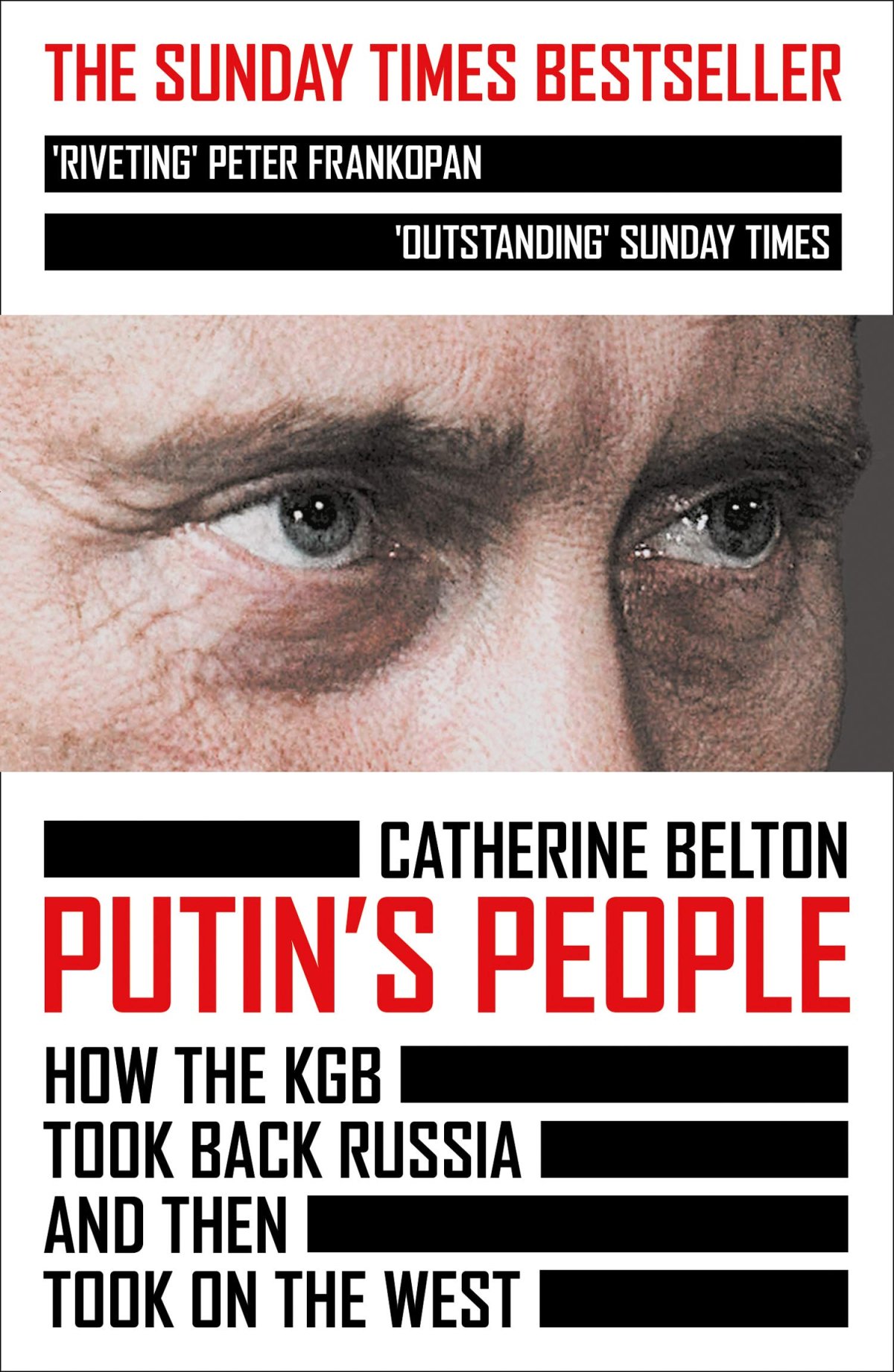
Catherine Belton’s Putin’s People serves as a definitive account of the modern Russian state’s evolution, meticulously documenting how a tight-knit circle of former KGB officers reclaimed the country’s levers of power. The narrative begins not in the halls of the Kremlin, but in the waning days of the Cold War, specifically in Dresden, where Vladimir Putin served as a mid-level intelligence officer. Belton argues that the collapse of the Soviet Union did not signal the end of the KGB’s influence; instead, it prompted a strategic retreat where clandestine networks were used to squirrel away state funds, forming the "black cash" reserves that would later facilitate their political resurgence.
As the narrative moves into the 1990s, Belton describes the chaotic transition of the Yeltsin era. While the world focused on the rise of the "oligarchs"—the flamboyant businessmen who amassed fortunes through privatization—a more disciplined group was quietly organizing in the shadows. These were the Siloviki, men from the security services who viewed the loss of empire as a catastrophe. Belton’s reporting suggests that these figures viewed the early privatization efforts not as a move toward a market economy, but as a temporary loss of state assets that needed to be repatriated under the control of the security apparatus.
The Consolidation of Power
The turning point in Belton’s analysis is the systematic dismantling of the independent oligarchic class that occurred after Putin’s ascension to the presidency in 2000. The arrest of Mikhail Khodorkovsky and the seizure of Yukos serve as the primary case studies for this transformation. Through these actions, the Kremlin sent a clear message: private wealth was permissible only so long as it remained subservient to the interests of the state. This era marked the birth of "State Capitalism" in Russia, where major corporations like Gazprom and Rosneft became extensions of the security services, used both to fund the inner circle and to exert leverage over neighboring nations.
Projecting Influence Abroad
The final sections of the book explore the external ramifications of this internal consolidation. Belton meticulously tracks how the same "black cash" networks used to stabilize the domestic regime were eventually turned toward the West. By exploiting the legal and financial systems of London, New York, and Zurich, the Kremlin’s loyalists were able to integrate themselves into the global economy while simultaneously working to undermine its democratic foundations. The book suggests that the blurring of boundaries between organized crime, intelligence operations, and legitimate business is a core feature of the current Russian system.
Ultimately, Putin’s People is less about a single individual and more about a collective project. It describes a system where loyalty is the ultimate currency and where the methods of the Cold War have been adapted for a hyper-connected, globalized world. Belton’s work provides essential context for understanding the current geopolitical landscape, illustrating that the challenges posed by modern Russia are the result of a decades-long strategy aimed at restoring the primacy of the security state. The book remains a vital resource for anyone seeking to look beyond the headlines and understand the deep-seated structural forces driving Russian policy today.


Comments (0)