

Free Download Muhammad: A Prophet for Our Time by Karen Armstrong PDF
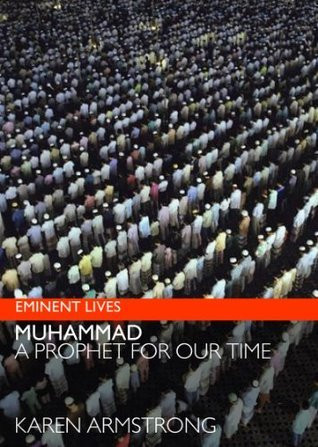
Karen Armstrong’s "Muhammad: A Prophet for Our Time" serves as a crucial resource for those seeking a sophisticated and empathetic understanding of the life of the Prophet Muhammad. As a celebrated scholar of world religions and a former nun, Armstrong brings a unique perspective that is both historically rigorous and spiritually sensitive. The book aims to provide a balanced account that moves beyond the polarized views often found in contemporary discourse. By placing the Prophet’s life within the specific socio-political climate of seventh-century Arabia, Armstrong allows readers to appreciate the magnitude of the transformations he initiated. This biography is particularly noted for its accessibility, making complex historical and theological concepts understandable for a general audience without sacrificing depth or accuracy.
The Socio-Political Landscape of Mecca
The initial chapters of the book focus on the state of pre-Islamic Arabia, a period characterized by intense tribalism and social inequality. Armstrong uses the term jahiliyyah to describe the prevailing culture of the time, which was defined by a code of honor that often led to endless cycles of violence and revenge. Within this environment, the revelations received by Muhammad presented a radical alternative. Armstrong illustrates how the early message of Islam was fundamentally an ethical one, calling for a redistribution of wealth and a commitment to communal well-being. The Prophet’s insistence on the unity of God was not just a theological statement but a direct challenge to the fragmented tribal system that relied on various local deities to maintain power dynamics. This portion of the book highlights the immense courage required to speak out against the established order of the Quraysh tribe.
The Transition to Medina and Community Building
As the narrative shifts to the migration to Medina, Armstrong explores the Prophet’s evolution into a statesman and community leader. This period, known as the Hijra, is depicted as a pivotal moment where the spiritual principles established in Mecca were put into practice through the creation of the Ummah. Armstrong discusses the complexities of governing a diverse population, including the various treaties and alliances that were formed. She carefully examines the military conflicts of this era, arguing that they must be understood as defensive measures taken within the context of the time rather than as a blueprint for perpetual aggression. By analyzing the Constitution of Medina, Armstrong shows how the Prophet sought to create a society based on mutual protection and religious tolerance, concepts that were remarkably advanced for the era.
Historical Accuracy and Modern Relevance
Throughout the text, Armstrong maintains a neutral and objective tone, relying on early Islamic sources while applying modern historical criticism. She addresses the misconceptions that have historically clouded Western views of Islam, providing a necessary correction to simplistic narratives. The book emphasizes that Muhammad was a man of peace who was forced to navigate a world of violence. Armstrong’s analysis suggests that the core values of Islam—compassion, justice, and the search for truth—are as relevant today as they were fourteen centuries ago. By providing this historical context, she encourages a more informed and respectful dialogue between different cultures and faiths. "Muhammad: A Prophet for Our Time" remains a definitive work for anyone interested in the intersection of history, religion, and social change. This text provides not just a biography, but a roadmap for understanding the ethical foundations of one of the world's major religions in a way that is both intellectually satisfying and spiritually resonant. It serves as an invitation for readers to engage with the past to better navigate the complexities of the present.


Comments (0)