

Free Download The Paradox of Choice: Why More Is Less by Barry Schwartz PDF
Explore Barry Schwartz's 'The Paradox of Choice'. Learn why having more options leads to anxiety and how to make better decisions in a world of excess.
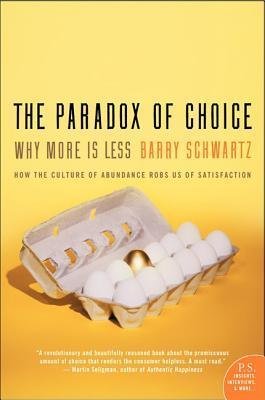
In the modern era, the prevailing wisdom suggests that more choice is always better. Whether we are selecting a brand of cereal, a mobile phone plan, or a career path, we are conditioned to believe that an abundance of options equates to greater freedom and satisfaction. However, in his seminal work, The Paradox of Choice: Why More Is Less, psychologist Barry Schwartz challenges this fundamental assumption. He argues that while some choice is essential for human well-being, an excess of options leads to anxiety, indecision, and ultimately, a decrease in overall happiness. This book has become a cornerstone for understanding the psychological toll of modern consumer culture.
The Burden of Modern Abundance
Schwartz begins by illustrating how the explosion of choice has permeated every facet of our lives. From the hundreds of items in a typical grocery store aisle to the endless stream of digital entertainment, the sheer volume of decisions we must make daily is unprecedented. This saturation does not merely complicate our shopping trips; it fundamentally alters our psychological state. When faced with too many alternatives, the effort required to make an informed decision becomes a burden rather than a privilege. This phenomenon, often referred to as choice overload, can lead to decision paralysis, where the individual becomes so overwhelmed by the possibilities that they fail to make any choice at all.
Furthermore, even when a choice is made, the presence of numerous alternatives often diminishes the satisfaction derived from that choice. Schwartz identifies several psychological mechanisms at play here:
- Regret and Anticipated Regret: With so many options available, it is easy to imagine that a different choice would have been better. This leads to post-decision regret or the fear of making the wrong move before the decision is even finalized.
- Opportunity Costs: Every time we choose one thing, we are implicitly rejecting many others. The more options there are, the more losses we perceive, which subtracts from the joy of our final selection.
- Escalation of Expectations: When there are dozens of versions of a product, we expect the one we choose to be perfect. When it inevitably falls short of perfection, we feel disappointed, even if the product is objectively high-quality.
Maximizers vs. Satisficers
One of the most influential concepts in the book is the distinction between two types of decision-makers: maximizers and satisficers. Maximizers are individuals who feel compelled to examine every possible option to ensure they are getting the absolute best deal or outcome. While this approach might seem logical, it often leads to exhaustion and lower levels of life satisfaction. Because a maximizer can never be certain they have seen every option, they are prone to constant second-guessing and social comparison.
In contrast, satisficers look for an option that meets their specific criteria for being good enough. Once they find a solution that crosses their threshold of acceptability, they stop searching. Schwartz suggests that while maximizers might technically achieve better objective results, such as a slightly higher-paying job, satisficers are generally happier with their outcomes because they spend less time dwelling on what they might have missed.
Practical Strategies for a Simpler Life
The book does not merely diagnose the problem; it offers a roadmap for navigating a world of excess. Schwartz encourages readers to consciously limit their choices and adopt the mindset of a satisficer. By setting personal rules—such as only visiting two stores for a specific item or limiting the time spent on research—individuals can reclaim their mental energy. He also emphasizes the importance of gratitude. Focusing on what is good about a choice rather than what is lacking helps mitigate the effects of regret and comparison.
Ultimately, The Paradox of Choice is a profound critique of consumer culture and a call to simplify our lives. It reminds us that true freedom is not found in the endless accumulation of options, but in the ability to commit to what truly matters. For anyone feeling overwhelmed by the demands of modern life, this work provides essential insights into how we can make better decisions and find greater contentment in an age of abundance. Understanding these principles is the first step toward reducing the stress of everyday decision-making.


Comments (0)